Incorporating A Brief Introduction To This Fourth New Blog Of Mine In Two Months
I
don’t recommend falling downstairs and fracturing your left humerus as a
path to enlightenment. But in the nearly three months that I spent
recovering from surgery, painfully lazing around at home with little to
do, I discovered that, once again, I needed to write, and to write
differently. So I started three new blogs to add to the three that I was
already running, and still it didn’t seem sufficient.
I got back to writing pretty quickly; consider theThen Play Longpiece
which I painstakingly and sometimes agonisingly typed with one finger
of my right hand, with my left arm still in a sling. But there remained a
space, a gap, something lacking.
Hence,
following some characteristically wise words from my friend Mark
Sinker, I have decided to start yet another blog. The purpose of this
one is to accommodate my instant, present-tense thoughts on new music
while it is still new. I have recently posted several things onThe Church Of Mewhich
really are not in keeping with a blog whose aim had always been to
facilitate and ensure an endgame, but I couldn’t think where else to
place them. For that reason I have transposed those pieces to here. This
is where you will now need to go if you want to read about “Genesis.” or “Angel Of My Dreams” or my favourite albums of 2024 or my posthumous
thoughts on Bill Fay. This is not nor could ever beMajaorKoonsorBlue In The Air. Those blogs were for and of their times. I am at the time of writing
sixty-one and my time, agree all of my doctors, is limited. I haven’t
got any time left to waste.
As
is my patience with the tired and tiring antics of music critics.
Everywhere I look it’s still the same studium of nothingness – forgive
the tautology. Marking and grading songs and records like they were
school ink exercises (“must do better”). Choking the flow of prose with
endless recycled “But The Kids Don’t Know, Say The 40-Something
Marketing And Accounts Managers” facts like brains and the internet
didn’t exist. Goldfish memory-level kneejerk reactions. Wearisome
analyses of lyrics – to which it’s long since been proved nobody listens
– by otherwise unemployable English Literature graduates because
musical analysis requires technical knowledge and doesn’t usually make
for an enticing read. It’s like swimming through treacle.
Can
anybody think, without prompting, of a major music writer who’s come up
since, say, 2010? Somebody whose name you see appended to a review and
you think, ooh I must have a look at this? I can think of two names
tops, and even that’s stretching things. If they aren’t drones, then
they’re stuffed-shirt Sunday school teachers, nascent empire-builders
with preset agendas who get their moderate kicks scolding you for daring
to like pop music. As for the examples of sadly departed spirits? Do me
a favour. Reading Neil Kulkarni’s writing felt for most of the time
like being shouted at and I’m afraid he reminds me of my father, forever
raging against more or less everything and dropping dead of a heart
attack in his early fifties as a direct result.
Wherever
I look, that Picasso quote springs up like a newly-opened daffodil -
“It took me four years to paint like Raphael, but a lifetime to paint
like a child.” That’s the way music writing needs to go if it’s going to
be saved from the hell of A.I.-generated glorified advertising puffs.
Forget the received history and opinions. Your gut knows better. This
blog is one attempt to get that envelope opened and pushed.
IMPORTANT NOTE:This blog isnotgoing
to be regularly updated. I’m not getting paid for writing it and am not
your butler. It will concentrate on looking at new albums that we –
Lena and I – care about sufficiently to purchase in physical format, as
opposed to the 25-30 new albums that we routinely add onto streaming per
week (and whichallget listened to). I only have so much time left and there’s only so much space in our house for CDs (ask your parents).
MAYHEM
The
great thing about getting past sixty – in addition to the wonder and
astonishment that one has actually managed to reach and surpass that age
– is that you realise you really don’t give a toss, except for the
people and things that matter. Fashion? Pah. It isn’t 1990, when I
wasn’t yet thirty and used to purchase last-season primary-coloured
suits for £40 a throw from a stock surplus shop on Kensington Church
Street called Amazon, any more. We seek our refuge in memory and its
renewal. Nor is it any longer 1987, when I would doggedly look atMelody MakerandSounds(and occasionally theNME,
but not so much as before) and treat them like tick sheets – all those
wonderful-sounding bands and artists to see or records to chase up. When
London was London and you could get on a number nine bus from work and
alight from it fifteen minutes later in perfect symmetry with the side
of Tower Records Piccadilly blub blub old man medication who’s the Prime
Minister.
One
thing that hasn’t changed is that, when I hear great new music, I sense
its greatness pretty immediately, even in this purposely-devalued
world. I plan to write about some of it here. I stumble across somebody
like Geordie Greep, who was barely born into the very end of the twentieth century,
and what I see is a new Bowie. Perhaps I see the twenty-five-year-old me
I could have been if the world had been fairer to me and I had been
braver.
And
there is Lady Gaga, whom I have always regarded as a kind of marker in
the life that Lena and I have been building up here in Britain. When
Lena arrived in London on Thursday 18 December 2008 she brought with
her, among many,manyCDs,The Famewhich at that point was only available in North America. We were probably among the first people in Britain to listen to Gaga.
Since
then, she has never really let us down. To pick just one instance, we
associate “Bad Romance” with a confused Reggie Yates on Radio 1’s Sunday
Top 40 show who couldn’t make up his mind whether he liked the song or
not, and also with the last time we were at a Club Poptimism night,
upstairs in a pub in Lambeth North which no longer exists, me bellowing
along with the song and reaching all the high notes. We had absolutely
no problems with the Tony Bennett or Bradley Cooper stuff; quite the
reverse. She has been less the new Madonna, more an unspoiled Streisand.
And
music critics have never but NEVER known what to do about her, how to
go about her work. The looped pattern always repeats itself –Born This Wayisn’t as banger-consistent asThe Fame,Artpoplacks the strength ofBorn This Way,Joanneis a refreshing change fromArtpop’s dead end,Chromaticais a stunning return to honest form following the kwazy kountry adventurezzz ofJoanne,MAYHEM(she likes it capitalised) is an improvement on the help-mummy-my-EARSChromatica.
And so forth. They don’t do that with Sharon Van Etten or even St
Vincent – not so often, anyway - and you and I know exactly why that is.
By my imperfect count, we’ll be writing about Gaga seven times (so far) onThen Play Long(provided I live long enough to do the writing) so we can go all in-depth about the records there.MAYHEM, though. This is a splendid pop record and I need to make some mention of it now.
In
her liner note, Gaga makes no secret that with Michael Polonsky she has
finally found true happiness and three cheers for that achievement
wherever you see it. This joy is plainly, or more accurately
extravagantly, palpable throughout the record. “Disease”! What a
stentorian Roman demolition derby of a pop song; it really is like the
Jolly Green Giant resuscitated and stamping out all mediocrity and
compromise. It feels like the soundtrack to the fall of all Romes but
what is it actually about? It’s about somebody coming to save the
singer’s life, and what do you know, it could well be the singer
herself!
There’s a lot of the oldduendeaboutMAYHEM. The chorus of “Abracadabra” seems to be making a pitch forbratdom but fuck, Charli was seventeen when Gaga broke through here and knows who actuallyinventedthat
template. It’s a nice nod back to those who would follow in her
fainting footsteps. Elsewhere “Garden Of Eden” and the rock-SQUALL of
“Perfect Celebrity” even rouse hard-at-standing-up me out of my
physiotherapy-designed ergonomic armchair – four songs in and we’ve
already had two uncanny uses of the Picardy third. Yes, it’s yet more
isn’t-being-a-megastar-hell soliloquising, but Gaga has a lot more right
to wander down that worn trail than many others.
Look
at “Vanish Into You” which is what “Fade Into You” would have sounded
like if Shirley Bassey had had a go at covering it (“Highhhhh on a
hiiiiiiiiiill…youcall” over a rustling low drone – completely Dame Shirley, that bit). “Killah” is let’s face it “Sign "☮︎"
The Times” with a bit of Depeche Mode flavouring but it’s fun. As for
“Zombieboy”; well, if Gwen Stefani is going to go and make country
albums from now on (AND WHY SHOULD SHE NOT?), someone has to step into
her no’ bad right enough/lovely-on shoes and this is pop music in its
highest form – catchy with that lovely Royksoppian celery crunch of a
rhythm track, chanty timesπto
infinity and you just want to step out onto the street and yell the
song into the air of the world, but guess what, it’s an elegy for a
friend of Gaga’s who died (the Québécois dancer and performance artist
Rick Genest, who appeared in the video for “Born This Way” and who in
2018 suffered the same sort of stupid accident that put paid to SOPHIE
and Phillippe Zdar) – “Goodbye, I’ll see you in my dreams.”
MAYHEM’s
second half dials down from that initial upbeat intensity, but not from
intensity itself. Again, a lot of the songs see Gaga doing what she
enjoys most; trying on different musical hats and seeing which ones fit.
So we get her Lana del Rey song (“LoveDrug”), her smiling nod towards
Taylor S (“How Bad Do U Want Me” with its definite Yazoo/Yaz musical
undertow), her straight-ahead eighties AoR (“Don’t Call Tonight”),
hyperactive eighties Michael Jackson (the great scythes of “Shadow Of A
Man”) and neurotic nineties Michael Jackson (“The Beast” a.k.a. “Give In
ToMe”). All
terrific stuff and I am absolutely aware that the “beast” to whom she is
pleading and/or demanding could well be her own mirror.
But,
Jesus H Cornelius Cardew, these last two songs (which are half the
length and at least twice the value of the four ones Richard “I Did It
Under Sufferance” Strauss wrote) – well, they sound like the final two
songs ever to be sung on a rapidly-disintegrating Earth. Yes, “Blade Of
Grass” is sung about and to Michael Polonsky, who has clearly been the
answer to all questions Gaga could find, but…I think of the Cornel Wilde
movieNo Blade Of Grassfrom
1970, which was a pretty horrible post-global virus action thriller
with a gloomy theme song by Roger Whittaker. It was like28 Days Laterbut
with flares and Wendy Richard. I saw it one late Monday night on STV in
the mid-seventies and was depressed for the rest of the week.
And
I also think of a decimated world, hurtling towards anti-existence, in
the midst of which this astonishing and powerful song is sung with
desperate beauty. “Come and wrap that blade of grass/Around my finger
like a cast” (there are no rings left to be found), “Even though the
church burned down/I’ll be your Queen without a crown” – it is terribly,terriblymoving.
“This is the lawn of memories I mourn” – and the song grinds slowly,
like the negative of “Good Luck Babe,” down and down until the machine
of life stops.
Maybe that might have proved too bleak an ending toMAYHEM…which is why the Bruno Mars duet “Die With A Smile” makes perfect sense as a closer (or evenCloser– here is the still-young Bruno, but where has he been?) for here are the same sentiments sung fromthe other lover’s perspective(see also the conflicting accounts of Buckingham’s “Say Goodbye” and Nicks’ “Goodbye Baby” which concludes Fleetwood Mac’sSay You Will), here isanother voice.
And
what a beautiful and nigh-perfect pop song “Die With A Smile” is, like a
reborn Bacharach – and those quiet 6/8 interludes of uncertain guitar
between verses even make me think a little of the Cocteau Twins. Its
video would suggest some familiarity with Stephen Sanchez’s “Until I Found You,” which latter is not so muchretro-nuevofifties
pop but more an implanted replicant memory of what “the fifties” might
have been like – that’s what makes the song so great. In both cases, the
latent emotion burns through the mask. “If the world was ending…I’d
wanna be next to you.” This, you collecting doughnuts, is what pop
music, let alone being human, is all about. Remember that while we’re
still here, and leave those last two songs in particular as monuments,
or footprints, to tell whatever comes after us that once we were here
and this is what we were capable of doing. THERE IS AND CAN NEVER BE NO
HIGHER OR MORE NOBLE AIM.
I
first heard of Bill Fay in November 1998, when I was an inpatient at
the John Radcliffe Hospital. I had been painfully transferred there from
the Chelsea and Westminster after having been operated upon for
injuries sustained in a contretemps with a 52 bus across the road
from Knightsbridge Barracks. Laura would bring up copies of the monthly
music magazines for me to peruse on the ward, as well as things like Time Out
(which at the time you could get in Oxford). From the latter I recall,
possibly inaccurately, radio presenter Bill Overton being interviewed
about record shops in Primrose Hill (were there any?).
But from that month's MOJO magazine,
in the reissues section, I came across Jim Irvin talking about a
two-on-one CD reissue of the first two albums by Fay. One was
self-titled and pictured him standing atop the Serpentine. The second
was called Time Of The Last Persecution. Reference was made to names like Mike Gibbs and Ray Russell and my curiosity bell rang.
Upon
my discharge from hospital I painfully made my way to HMV on Cornmarket
Street where they had one copy of the CD in their racks. I swear to
goodness that HMV and Virgin, facing each other on the same street like
gunslingers, only ever got one copy in of certain CDs because they knew I
was likely the only one who was going to buy them.
Certainly,
in the process of recovering from a severely traumatic incident, and in
the context of late nineties Oxford, I required quietly
disturbing, yet fundamentally pastoral, music to ease my varying
manifestations of pain; and this CD left a mark on me. English music, as
much as or more than any other, demands of its
appreciation its relationship (real or imagined) to the environment in
which you listen to it. And I still cannot listen to Fay's exquisitely
tactile music without thinking of Oxford in that transitional, queerly
sunny winter of 1998-9.
On that See For Miles CD were also included both sides of Fay's solitary single
from 1967. The B-side "Scream in the Ears" is a surprisingly volatile
take on electric Dylan, but the A-side "Some Good Advice," painfully
perfect in its two minutes and eighteen seconds, is, I am convinced, one of
the most punctuating singles I have ever heard. And it is so fragile; a
repeated descending minor key piano chordal range with melodramatic
drumrolls every eighth beat and a mellotron floating above the music
like Banquo's ghost. Lyrically it is what the title suggests; advice to a
young child, more probably advice to himself. "If you want to build a
shed/Then go ahead/And bulid your shed...And if you want/To paint a
gate/It's not too late/To paint your gate." Sounds like a Junior Choice
reject? No...it's so frail and hopeless a scenario, so shattering in
its humility. Hear how the guitar suddenly shreds halfway through the
track before disappearing again. The final lines, sung with evident
relish, are: "Don't listen to/Anything anyone tries to tell you." Except
he doesn't. It's one of the most striking singles of its, or indeed any,
year. You may weep at it should your mind be framed in a certain way.
Then nothing for three years, until he emerged, clean-shaven atop
the Serpentine, for his 1970 debut. The sonic palette was magnified
immeasurably (though not everyone agreed) by the involvement of
Gibbs as arranger. On the sleeve there is a telling commentary by Fay
wherein he states that as a boy he spent five years constructing a small
wooden box. When completed, he took it to his woodwork teacher, who
proclaimed it the worst piece of woodwork he'd ever seen and smashed it
with a mallet. This album, he stated, was the first creative thing he'd
done since then. He would do what he needed to do, and then go away
again to dodge any further mallets.
So this is what he needed to say, and he needed to say it all at
once. Critics complain that Gibbs' orchestrations compete with and drown
out Fay's songs, but here the large sonorities are to me as apposite as
those Gibbs was later to devise for Joni Mitchell's Don Juan's Reckless Daughter.
One only has to hear how the strings and brass rise and fall with
terrible suddenness behind Fay's vocal on "The Sun Is Bored." The record
is much more explicitly bleak than anything *insert doomed
turn-of-the-seventies singer-songwriter of your choice here* did, but
not
terminally so.
The brief but biting "The Room" is the nearest the record
comes to the atmosphere of "Some Good Advice," but here Fay presents us
with a black and unsentimental portrait of drug addiction which again
and again finds no respite in the unresolved graveyard of its minor
chords battling against his fatalistic, semi-croaked "forever." "We Want
You To Stay" is pretty unambiguous in its message, too, though Gibbs
lifts us out of the despair with his radiant sunlit chords, as well as
an uncredited but instantly recognisable John Surman blowing soprano saxophone. The
desperate faux-Cockney of "Sing Us One Of Your Songs May" is
reminiscent of the John Cale of Helen of Troy tackling "Yesterday
Once More" - who the hell am I? Yet there persist hope and light until
the
end, with the mildly rebuking but essentially positive message of "Be
Not So Fearful," sung in a tone somewhere between Mick Softley and the
Singing Postman - a song which somebody will someday cover and take to
number one.
The record didn't sell - was barely promoted - but Fay still had
further things to say, and say them he did, albeit ten million times
more brutally, on his second album, Time Of The Last Persecution.
This record was scarcely even reviewed, let alone promoted, and its
cover depicted a now long-haired, bearded and very weary-looking "Billy
Fay." Out went Gibbs' lushness; in came what was essentially the working
band of guitarist Ray Russell, who had appeared, albeit
relatively restrained, on the first album, but who was now given licence
to do whatever was needed. And certainly in that strange period between
1970-73, bookended by comparatively conventional careers, Russell was
as near as this country ever got to producing a guitarist as
proficiently fiery as Sonny Sharrock.
How worst to describe Persecution? The name of Syd Barrett
immediately springs to mind, but more pertinently, imagine a Syd Barrett
who, in a rare moment of utter clarity and lucidity, saw his situation,
saw the world and for 30 or so minutes was able to make complete and
articulate sense of it. Not so far from Roger Waters? Perhaps not - and
there's certainly an element of Waters' later misanthropy in songs like
"Let All The Other Teddies Know." But there is a severely scarifying
assuredness to the brutality into which this record more often travels,
especially on its second side. The songs on side one, including bruised
ballads with divine Beatles chord progressions like "I Hear Your
Calling" or "Don't Let My Marigolds Die," give us an idea of the
suppressed immense rage at which Russell's guitar intermittently and
immaculately scratches. The focus on the very Barrett-esque "Laughing
Man" is as sharp as last Thursday afternoon's snow. A horn section
- two of whom worked with Keith Tippett's Centipede - appears on "'Til The Christ Come Back" but its repeated fanfares become
increasingly higher-pitched and more discordant. The track fades out
just as it's about to explode.
And detonate the music does on side two, most pronounced on the
title song over which Fay's Cale-like croon (and even Bryan
Ferry in a sour mood-anticipating croon) over stately Sunday school
piano chords is increasingly subverted and finally drowned in a freeform
whirlpool, Russell taking off for atonal space; trombonist Nick Evans
and tenor saxophonist Tony Roberts not far behind him. "Come A Day" is the
equivalent of the previous album's "Be Not So Fearful," but no easy
salvation is to be found here as again the track disintegrates into
shards of noisy improvisational causality, the piano continuing sternly
underneath the apocalypse. The album concludes with the
still terrifying lullaby "Let All The Other Teddies Know" (with its
sinister aside "be ready when the cupboard explodes"). This song is
relatively peaceful, but Russell cannot resist adding some more
Sharrockian runs towards the end, just to let you know that the demon,
and death, still exist.
And, for a long time, that was it. Fay released nothing more in the interim and until the 1998 CD
reissue (see its liner note, if you can find a copy) had been assumed to have vanished
without trace, into some sort of *insert doomed singer-songwriter etc* type of self-imposed
hell; another casualty of causality. But stories are not always so
facile. With the renewed interest, Fay bemusedly re-emerged to say that
actually he had been holding down a perfectly good day job for the last
quarter-century, and yes he did still write songs but didn't feel any
great need to put them out on record; because (he didn't say it, but we
knew it anyway) everything he had, was driven, to say had been said,
definitively and finitely. The malletphobia out of his system, he could
then resume his life. Art, music, as catharsis. He didn't die, didn't go
mad, didn't do drugs. He lived.
"Tomorrow, tomorrow, and tomorrow, Creeps in this petty pace from day to day, To the last syllable of recorded time; And all our yesterdays have lighted fools The way to dusty death. Out, out, brief candle! Life's but a walking shadow, a poor player That struts and frets his hour upon the stage And then is heard no more. It is a tale Told by an idiot, full of sound and fury Signifying nothing." (Shakespeare, The Scottish Play, V.v.19-28)
If a sense of closure was detectable in Time Of The Last Persecution,
we were subsequently confronted with what sounded like a renewal. It is
hard even in
this unlimited space to articulate how completely I have been affected,
emotionally and otherwise, by the third Bill Fay album, Tomorrow,
Tomorrow And Tomorrow,
which was released in 2005, a quarter of a century after it had been
recorded. It is a record which would have sounded as out of step in 1978
or
1981 as it would have done in 1971 and perhaps only fractionally less so
in 2025. No record
company in any of those years would have known what to do with this kind
of a vision. Listening to it, as I still do twenty years on, I not only
think of all those avant-MoR
operatives whose careers were curtly curtailed by punk - John Howard,
John Carter, Gilbert O'Sullivan - but also of things yet to be promised,
of the late Elliott Smith and the later Mark Hollis. Perhaps the only
way to view Tomorrow, Tomorrow And Tomorrow is in the same way as Wilson's SMiLE - a singular masterpiece, relieved of any time zone, standing both outside and over much of the rest of popular music.
What
remains most immediately apparent about Tomorrow - apart
from the fact that it is not credited to Bill Fay the solo artist, but
to the Bill Fay Group - is a sense of calmness which is made all
the more
Olympian by its having been being so hard-earned. Although this record
is capable of
bewitching the listener on its own, it should be heard in tandem with
his
two Deram albums, which were made available
on CD again not long afterwards - I was personally thanked by Fay in
his liner note to both. The overwhelming spiritual aura of this record
is made
more poignant - made more Alice Coltrane rather than made more Cliff
Richard - by the pungency of its predecessors, especially the violent
and tumultuous Time Of The Last Persecution with its explicit references to "The Christ."
The "Group" aspect of the Bill Fay Group cannot be under-emphasised; whereas on Persecution
Fay worked with Ray Russell's group, here he appeared with improvising
trio the ACME Quartet, featuring bassist Rauf Gulip, drummer Bill
Stratton and Gary Smith, subsequently one of the leading names in
European improvised music, on guitar. In many ways Smith comes across as
the natural successor to Russell; the anger remains present in his
playing but is tempered by compassion and the overall need to, as Fay
puts it in his brief sleevenote, give service to the music. As Fay goes
on to state, the Group did not work towards the hope or expectation of
receiving a recording contract; it was enough that the music be played
and recorded, even if no one else got to listen to it (there are parallels with my own blog writing). Thankfully,
everyone could now get to listen to it - and it is still, to deploy a very Bill Fay type of adjective, astonishing.
The
opening track in particular, "Strange Stairway," is sufficiently
poignant for me to want to pause from living, even if only for the three
minutes of the song's duration. Smith's vulnerable tremelo picks a
high-register motif against an indescribably moving chord sequence,
while Fay's only slightly less vulnerable voice comes in, trying to
clamber back into the world: "I feel, in myself, the river run, the
ocean swell/And miles above me, a strange stairway/And one thing I know
for sure/The only thing that'll get us up off the floor/Is the love
inside we." Stratton's cymbals tick away in Robert Wyatt-esque quiet
insistence throughout, but the symbolism which sets the tone for the
rest of the record is already clear; an upward journey towards salvation
and deliverance. Best heard while walking up Dunstan Road towards
Headington Cemetery on a fresh Wednesday spring mid-morning. The
religiosity is accentuated in "Spiritual Mansions"
("Lifegiver/Blessed Redeemer") but is not unquestioning; Fay's quiet
voice trembles: "There's a woman in labour/The Creation awaits you,"
before the music suddenly swells with his more urgent pleas: "To
close/These bodies/These souls/In immortality," the last syllable of
which is punctuated by an abrupt booming Moog synthesiser before
receding just as rapidly. Stratton again soundtracks the nagging doubt
with dub-like rimshots.
"Planet Earth Daytime" is the sort of
song you wish could have been number one instead of "The Lady In Red";
the first ninety seconds have "hit" written all over them, with what begins
as a small urban tableau ("She leaves her apartment/About midday/And the
colour of the pavement/Is the colour of her face") before the music
gathers in intensity for the chorus, where Fay indicates the hint of
imminent apocalypse ("Planet Earth daytime/Maybe the last time/Who
cares?").
But then the initial music dies away, or is supplemented by
another melody coming in from the right channel, lending the piece some
bitter bitonality as Fay tacitly howls "Our world" before embarking upon
a not too decipherable monologue ("So many flags...Pray for the
sergeant major who only had orders to give - nothing else") which in
turn is briefly supplanted by a shocking flare-up of atonal improv noise
(flashbacks of the Persecution hell?). This too quickly disappears as Fay launches into what sounds like a dry run for the soundtrack to Local Hero
with its optimistic guitar lines shadowing (or shielding) words which
are still to do with the apocalypse; Fay bargaining for a place on the
Ark ("Dangerous sailing/In a ship that's going down"). Over the sunset
major key ending he dimly intones what could either be: "Let's all
aboard" or "Let's go home." It's up to us to decide - or listen to the
strikingly similar, albeit more jauntily articulated, themes of Duncan
Browne's unexpected 1972 hit "Journey."
"Goodnight
Stan" revisits the disassociated war veteran theme of "Sing Us One Of
Your Songs May," though there is now a touch of George Harrison about
Fay's petitioning of Stan to "take a watering can to protect yourself,"
since "Soon they say/They'll be taking us away/To another place/Was it
Mars/Or was it Jupiter?" The effect is plangent as well as poignant, and
the song is terminated by an unearthly lament of a howl which turns out
to be Fay's own voice. At this juncture there is nothing to add apart
from the prayer which is the title track, a modified "May Each Day" (not
to mention an updated "Some Good Advice") where Fay, alone over a
simple piano and synthesiser line, advises his child (?) "May you have
faith/May you have hope/May you have life/And a skipping rope/To turn
with you/And see you through/Tomorrow, tomorrow and tomorrow." The
faintest glow of hope in a torrent destined never to end.
And
here is where the album "proper" disappears into the background, as we
are now presented with an extraordinary collage of nine song fragments
clearly taken from demos and home recordings - an album within an album,
or the hidden fourth album, like a lo-fi take on side two of Abbey Road,
which even on its own betrays more invention than can be found
in...well, I'll leave it to your discretion to fill in the names of your
choice. As though the anaesthetic has taken effect and you drift into a
pellucid dream of the album. "Just A Moon" manages to predicate the
work of Roddy Frame and Aztec Camera (listen in particular to that
"Round and ROUND you" line). Some fragments, for example "To Be A Part"
and "Turning The Pages," exist only as barely audible minutiae, coming
indistinctly from the right channel only ("Nothing lasts forever," the
sleeve remarks ruefully, "Tape deteriorates in time"), like
unanticipated ghosts. With "Sam" we are again in the world of Scott
Walker's "Two Ragged Soldiers," as Fay tries to remind his aged
colleague of who exactly he is - "When you walk down the street, does it
feel like a dream?.../Hard to recall where you've been?/...It's an ill
punch that knocks into no one no sense" - over a Wyatt-type keyboard
figure as the progenitor tries to deny the possibility that both he and
Sam are slowly but steadily disintegrating, both physically and
mentally.
This segues swiftly into "Lamp Shining," or the ending
of the song "Lamp Shining," a song as venomous as Lennon at his
blackest: "In our stalls, there's nowhere for you to play!" yells Fay.
"At our table, there's nothing we want you to say!" before ironically
advising "Keep your lamp shining as you journey on your way" as the song
is instantly engulfed in more spiky freeform chaos, a life already
terminated. Then, via the curiously Bacharach-ish "Love Is The Tune," we
reach the positively vituperative "After The Revolution" where Fay's
protagonist has just shot the enemy ("With my guns still smoking"). The
victim's dying words - again explicitly paralleled with the Passion of
the Christ ("There is no peace unless you bleed!/Bleed for Christ!") -
give the impression of Lennon's "Revolution" with its acid content
quadrupled and set against a restless "Whiter Shade Of Pale" organ riff.
"A voice that in its time vomited forth a thousand words in anger"
reflects Fay as he realises the uselessness and waste of his gesture,
and by extension that of "revolution" in inverted commas, as he is
finally driven to overflow the barlines and launch into another bitter
spoken monologue into which the music disappears, though one feels it
could continue eternally. Finally "Jericho Road" sees Fay wry over the
possibility of an ending to everything ("I may get the chop from Kung Fu
fighters/...I pray if I do, the Samaritans will find me") before
returning to the opening "Strange Stairway," here noticeably faster,
sounding like a Wings outtake, but its humble message undiminished,
completing the cycle.
Then we return to the "album" with Fay's
spiritualism heightened and intensified to new levels of poignancy.
"Life" finds him asking fundamental questions over a lugubrious organ
and Smith's guitar, mimicking seagulls ("Who are we? Where do we stand?
Who holds the key? Who holds the plan? When you hear no voice, no sign
of land. Who are we to say we are?") before launching into a passionate
chorus (echoes here of what the vastly and sadly underrated Ultrasound
would go on to do years later with songs like "Best Wishes") wherein Fay
acknowledges the facade but refuses to diminish his belief in its
potential effects - "So let the world make believe/That life is
risen/That life is conquered/So that the world might believe/And feel
the power of the life and love we see!" This anguish is brilliantly
articulated by Stratton's frequently freeform drumming (very reminiscent
of Laurie Allan on Wyatt's version of "Song For Che") and Smith's
squealing, raging and weeping guitar solo, perching on the verge of
chaos but always stepping back when required.
"Man" is an
indistinct echo of Nilsson's "One" where piano is again succeeded by
distant guitar squalls ("Nobody knows when you are gone"), while
"Hypocrite" will make you shake your tears in disbelief that a song with
lyrics as elemental as "Love is like a rose" can make your soul
collapse, particularly when the lament vanishes into a pronounced
late seventies synthesised drone.
"Cosmic Boxer" sums up the tenor of Fay's
message on this album; the ordinary human, venturing into the world
every day, struggling to stay in the contest even if, as the song
admits, they are only boxing their own shadow, but finally succumbing to
the Beckettian leitmotif of I-can't-go-on-I-go-on ("It's true he viewed
the cocoon with despair/Yet he boxed on"). At the end the song slows
down into a regretful minor/major key seesaw as Fay pointedly states
that the "boxer" will "always find a way through" but "not by your own
merit." Note Stratton's solitary gong/cymbal crash towards the song's
end - the world forever treading on our heads.
It's getting near
the end, now, and so must Fay sing of passing from this world into
another. "We Are Raised" starts out as a simple Dr Dykes hymn - so
damned simple, the sentiments "We sit beside Him now" and "Thank you for
the life you gave," so damnably poignant that I can't listen to it
without dissolving into floods of mourning. And then, right at the end,
the Sunday school piano segues into a 1978 synthesiser - and the latter
sounds, chillingly, exactly like PiL's "Radio 4." Two different and
distinct routes towards the same heart. See what he did there?
To
end, and no other song could end this remarkable record, there is
"Isles Of Sleep," no doubt deliberately placed at the end to speak to
2005 listeners as much, or more so, than any potential 1981 ears. Over a
cyclical piano motif which foretells of "Sleepy Song" by Tindersticks
(and also sounds like the prelude to a Meat Loaf song), Fay
finally turns to address you:
"After all these years/I emerge from the
darkness."
(Dylan - not dark yet)
"I dwelt in the Isles of Sleep/Banished as a shadow/Where no light could reach/No teachers' arrows"
(remember that one of Bill Fay's day jobs was as a teacher)
"The purpose now is plain/To not have lost and not have strayed/Would have borne me far away/From my true nature"
But we all have to come back to the world, even if at the end.
"Bereft of spear/Naked...(the voice lowers to humility)...harmless."
Then
a new piano motif begins, and if I tell you that it anticipates, by
twenty or more years, the similar closing section of Pulp's "Sunrise,"
you might not believe me.
However:
"Nothing has changed.
Only me.
The world's still the same.
(pause)
(pause)
But I'm not the same."
Nor could I ever be. In 2005 I thought that this record had saved me from myself. Again.
"O
my lord, when I was last at Messina, I looked upon her with a soldier's
eye, that liked, but had no leisure for loving; but now, in this happy
time of peace, thoughts of war have left their places vacant in my mind,
and in their room come thronging soft and delicate thoughts, all
prompting me how fair young Hero is, reminding me that I liked her
before I went to the wars." (Charles and Mary Lamb, Tales From Shakespeare: Much Ado About Nothing)
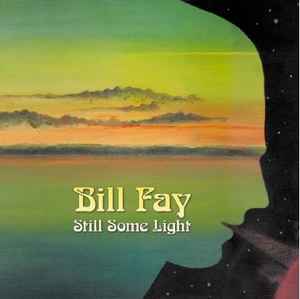
The interest in Fay magnified. Other studio compilations appeared: From The Bottom Of An Old Grandfather Clock (1966-70 demos) and Still Some Light
(2009 - a two-CD collection, one of band demos from the seventies and
another entirely solo album recorded at home the previous year). I think
Fay was more relieved by his reacceptance than he let on, but the tenor
of his music eased towards contemplative and spiritual - his
Christianity invited the listener in, as opposed to scolding them.
Three further albums followed in his later years - Life Is People
(2012), his first hit, which saw him reunite with Russell and drummer
Alan Rushton as well as younger acolytes; "The Never Ending Happening"
is one of those songs which sound so bloody simple until you realise how
hard it is for anybody to express the plain wonder that Fay manages so
expertly. Who Is The Sender? (2015) continued down the same,
increasingly intangible path (Fay sounds as though walking into a dream,
or another life, but his buried anger is barely abated - "The Freedom
To Read" is so relevant a composition it could have been written last
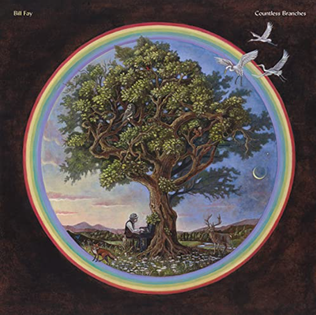
week), and 2020's Countless Branches turned out to be his
swansong - the music brushed down to its essence, largely just the man
and his voice and piano, as though picking up from the ashes and
cherishing what survived that last, apocalyptic persecution. It came out
in very early 2020, just before the pandemic hit, just before normal
life was ending, hence it feels like a last will and testament on behaf
of humanity.
There
are pauses so long and deep in places (e.g. "In Human Hands") as though
he were composing these songs before our ears. When other instrumental
voices appear - the electronic keyboards at the climax of "Salt Of The
Earth" for instance - the maximalism of this newly-attained peace
balances out the noise and torture of Persecution and gets back to the
relegation of fearfulness. The closing song - Fay's last song (although
he was apparently working on a seventh album a month before his passing
yesterday, aged eighty-one, so some words may yet need to be said) -
"One Life," sounds three hundred years old and is likely still to be
sung three hundred years hence, if we permit ourselves the option to do
so.
When
we know that our time is almost up - we don't always know that - we
look back at our lives and ask ourselves what difference our existence
made to the world. Me? I was perhaps the third person to write about
Bill Fay when he remained a semi-open secret (I doubt even Kate Bush
knew about him back in the seventies). He came from the Archway and when
you heard him genially converse you knew that. But he wasn't much of a fuss about audiences, or exposure. When he appeared on Later With Jools Holland
in 2012 he stipulated that he would only perform if the studio were
cleared of people and other distractions. Let's leave Bill Fay there -
stooped at the piano, somewhat baffled but thankful to be given this
chance of expression, making cross-hand playing seem like the simplest
thing (when, as pianists know, it's one of the most difficult things),
his voice cracking with the miracle of astonishment, and the not yet
forlorn hope that it can drive away and banish the things which make
life, here and elsewhere, not worth living. Be at peace with yourself,
everyone.
(Elements of this piece were extracted and reworked from two previous blog posts; The Church Of Me, originally published 4 February 2003, and Koons Really Does Think He's Michelangelo, first published 18 April 2005. This current piece supersedes both.)
Later With Jools Holland
usually irritates me. Generally watching it is like being trapped in a
dark and dusty museum, filled with ancient exhibits made musty beyond
restoration by suffocating and compulsory respect. One ends up thirsting
to kick all of the statues over. Yet fall into a YouTube rabbit warren
of "Best Later Performances"-type playlists - there are harder
ways to conclude an exhausting day - and you will find half a lifetime's
worth of quite electrifying performances. Not Iggy Pop doing his best
David Brent impression on "Lust For Life" but the young, nervous and
angry Hot Chip looking to demolish "Over And Over" in their agreeable
leisurewear, the older and robotically weary LCD Soundsystem
deconstructing pop clichés
on "Tonite," the innocently subversive Christine and the Queens
balleting their way through "Tilted" before releasing their tension by
working out to "I Feel For You," the 1997 edition of Radiohead snarling
and pleading their way through "Paranoid Android," an older and sourly
wiser Robyn reassessing "With Every Heartbeat" in 2018, Underworld's
"Born Slippy," their shadows Sleaford Mods' "Jobseeker," Bob Vylan's
"Hunger Games," St Vincent's "Fast Slow Disco," Janelle Monáe
and band's "Tightrope," Arctic Monkeys' "Dancefloor," either version of
"Seasons (Waiting On You)" by Future Islands, Stipe and Mills at the
piano doing "Nightswimming" - oh heck, go check them all (or most of
them) here.
A
fortnight ago tomorrow, we didn't quite get the first performance on
that week's edition. Oh, there he is, at the piano, ready to bore us
with respect. But not quite; his ascending keyboard figures became more
dissonant the higher they went...
...and
then a cut away to a singer we couldn't quite place, with a sky-blue
gown and silver tears on her left cheek, very slowly and patiently
singing the first line and melody of "Puppet On A String." The first
verse and chorus were played as a pained gospel ballad - well, the song is about
an angel, that is, if you wish it to be - but before it could really be
resolved, a Hoover sample roared up in the distance and the paternal,
smiling eyes of Holland followed the singer as she quickstepped and
sashayed her way to a larger stage, and she and her band dropped a bomb.
She
sang about loathing, betrayal, selling her soul to a psycho, although
she made that last word sound a lot more like "SYCO" - who is this
"JADE," we wondered? We agreed it wasn't Jade Ewen, late-stage Sugababe
and Lloyd Webber-sponsored Eurovision entrant, before suddenly blinking
and realising, oh feck it's Jade Thirlwell, formerly of Little Mix, with
a song which had already been a big hit! Well, it doesn't get played on
the radio stations we generally have on, which condemn us to a life
sentence of "Build Me Up Buttercup" and "Ain''t No Pleasing You" and
would prefer not to acknowledge that the 21st century has happened. And
we're far too old to be listening to the stations which do play it (which is kind of those stations' point).
We knew enough, however, to recognise a "von dutch"
influence - complete with JADE threateningly crawling across the floor,
towards camera (a.k.a. us) - and should have been thinking, wow, this
is what any Girls Aloud comeback single should be sounding like, a
gigantic, BRATty fuck-you to the pop-strangling corporatism of the last
quarter-century. But the song is an ambiguous one - the industry, can't
live with it but hey, what would I do without it? - and concluded with
JADE and her three backing singers crouched together, tactile,
stage-front, intoning "I will always love you" as though it's their, or
more likely your (her eyes) last words.
I initially thought JADE was trying a little too hard. Me and my little, or belittling, thoughts. But it stuck with me, and the next afternoon, while Lena was at work, I watched the video for the song itself:
Holy
fecking moley. There are apparently eleven different JADEs in this
video, including I suspect the harassed diva P.A. who gobs into said
diva's coffee at the beginning. We cut to a JADE cast adrift on what is
recognisably Deptford High Street - another clever connection with Jools
Holland - wheeling her busking speaker which at the time is playing the
aforementioned "Puppet On A String" before the first ballad chorus
arrives instantly without due notice.
There
is no real need to analyse the video in detail - you can assess it for
yourself here - but the song's essential ambiguity is not shaded. She
clearly abhors the "life" of pop puppetry almost as intensely as she
adores it. She makes references (both lyrical and visual) to a
grotesque, manipulating industry mogul who may or may not represent Mr
Cowell, yet Cowell must have given his permission for that X-Factor footage to be used; perhaps he too now realises a certain futility of purpose.
Alternatively,
there is the inconvenient but unavoidable hint that, with Little Mix,
One Direction, Will Young, Girls Aloud and others, Cowell might actually
have been right about pop music all along. Little Mix I found extremely
annoying when they were in their "imperial phase." This may be due to
having been bombarded by their third album, at top volume, in two
separate branches of HMV when, to paraphrase Kenneth Williams, one was
searching and trying to concentrate.
Yet,
as with most pop phenomena when they're not being rammed down my throat
by the over-reactive media or dogmatic online fundamentalists, I found I
enjoyed Little Mix's music far more when it was ushered out of the
publicity spotlight. All five of their albums are actually funny and
inventive, and a lot more consistent than Girls Aloud's own studio
quintet (critics hitched on to the GA wagon two albums too late; it was Chemistry that was the classic, you doughnuts).
But
JADE - and I'm still spanking myself for not knowing "Angel Of My
Dreams" when it was literally in my face - looks as though she's going
to push the envelope out a lot further, more so even than Perrie
Edwards' own excellent singles. Watching the video for "AOMD" - directed
by Aube Perrie, who was also responsible for the video of the song's
unlikely double, "Starburster" by Fontaines D.C.
(Grian Chattan cameos in JADE's video, and she in his, at the same
dance studio location and wearing identical clothing) - not only is it
impossible to avoid the suggestion that this forms part of a NEW New Pop
resistance which spans everyone from A.G. Cook to KNEECAP, yes you
ageing lot this is a NEW BRATTY SHINY YELLOW THING happening (mind you, I
said as much to my student peers at university in the spring of '82
apropos the first wave)...
...but
also - and what REALLY got (to) me about the video, and therefore by
extension also the song - I watched the carefully-assembled footage of a
younger, if not necessarily happier, JADE, seemingly singing the song
itself and found myself weeping because...well, if you're a misdiagnosed
child prodigy, as I was, you know in your heart and bones (hi, Paul
Simon!) where it might end...
(*not entirely irrelevant detour: in the summer of 1982 I kept listening to Too-Rye-Ay
by Dexys and was scared crapless by the track "I'll Show You," in which
Rowland pitilessly iterates the downward spiral awaiting those who were
thought "different" at school. I thought I might end up like that, and
at times it has been close...)
...and
secondly because you feel...betrayed by the world and by other humans
and above all by their deadening system; you did everything by
somebody's book (usually the wrong one) and discovered that no, you
sucker, it was never going to work, the book was cooked, the dice loaded
against all of your hoped-for rolls, and so you end up purposely
excluded from the common discourse of human beings.
If
you're JADE, however, you FIGHT BACK, fighting your own self if you
have to, and who's wronger at video's end - the bartered/(self-)
battered bride, the outraged lady in red, the second-hand gum-chewing
dork reporter? Actually her eyes do not change - those of the beaten,
but not killed, redwigged first-class-of-the-second-class pop star,
those of the girl who used to be one of the girls of Little Mix (there's
a great nod to the Spice Girls - to whom I will presently be returning
in another blog, ahem ahem - when the echt-LM parade down a
moonlit city street, daring the camera to stop them) who is left, on her
one, at the back of the stretch limo, without words or hope, those of
the ordinary Jade from South Shields in the crowd, observing her own
reflection, past and/or future being screamed at but not before peering
at us with those implacably compassionate eyes.
And I thought of Sinéad, of course I did - that vibrato, those occasionally accusatory gazes to camera - and how on her 1994 album Universal Mother
she sings the song "Scorn Not His Simplicity." The man who wrote that
song did so in honour of his first son, who was born with Down's
syndrome and only survived until the age of four. The song was written
by Phil Coulter, who also co-wrote..."Puppet On A String," a song whose
original singer addressed with a degree of latent insolence worthy of
the later Charli xcx; not because of the song as such, but because of
the way The System had been methodically weighed out against her and
compelled her to perform it. Sandie Shaw has nothing but praise for
"Angel Of My Dreams"; she understands fully the things that female pop
performers are now, at long last, entitled to enjoy.
"He
remembers advice he gave Kehinde two years ago when things were hard
for her and Tomi: to own up to her part in it. Like so much advice it
was easier given than acted on. What is his own part in this now?
Tenderness, consideration, to try to see Sadako as she sees herself? The
credible and winsome words assemble themselves in his mind but there's
the stubborn gap between what he is able to think and what he is able to
do."
(Teju Cole, Tremor. New York: Random House, 2023, p 31)
The
first thing to say, after such a long time away from this place, is
that when I was in my twenties I made a point of not missing sunsets. My
twenties were not perfect times but were, I'd guess with hindsight, as
good as anyone else's of my time. I saw so many things, travelled to so
many different places, bonded with so many people in real life - the
bonds I was subsequently too lazy or messed-up not to let expire - and
yes, there was always light of different angles and dimensions.
The
problem is that my twenties took place in the decade 1984-94, when
computers were ludicrously huge and primitive and what would become the
World Wide Web was still getting its nappies changed. There were no
distractions the same as there weren't any in the time of the Brontës
or Dickens, so that they could set off on long arduous walks yet be
back for lunch and ready to spend an afternoon writing some of the
greatest literature anyone has ever written. They had no conception of
checking what A had said about B and if anybody criticised them, that
was okay because they were almost always family or friends. Real ones.
It
was not a situation where, rather than the liberating expression of
one's self to the wider world, you found yourself in a less forgiving
virtual prison cell, endlessly being scrutinised and mocked by strangers
- not "friends" - and being encouraged to confirm your deepest and dire
suspicions of inadequacy of self.
Desperate
for validation and sedatives: validation meaning being permitted to
remain alive, perpetrated by strangers who are most likely as fucked up
as you or more so but somehow belittling others to the point of
self-extinction makes them feel better about themselves. And art as the
ultimate sedative, short of morphine pumps, not to delight, stimulate,
electrify or move but simply to comfort with bland obeisance; all over
the place we now see art being purposedly rebranded as soothing,
uplifting, meditative pabulum for troubled and most likely mythical mood
mums. To nullify, rather than to move, the patient.
Don't give them any art that might shock them out of sterile acceptance, oh dear Lord no, please, leave us alone...
Well,
to paraphrase Howard Beale, I'm not going to leave you alone, and I
mean that in both its important senses. I came back here to tell you
about this extraordinary new record called "Genesis." (that period is
key) by RAYE, which is the greatest and most important British pop
single since "Unfinished Sympathy" by Massive Attack.
"Genesis."
not only makes me gasp in circular repetitious wonder in the same way
that "Bohemian Rhapsody" and "It's A Sin" - two of its indirect
ancestors - once provoked more youthful gasps. I suppose you could say
that I'm glad I lived long enough to be able to witness it, and for the
longest of times the odds on that happening were less than good.
Because
I am certainly not here to diss the internet, to misquote Destiny's
Child from a generation ago (but oh, how confidently the spirit of Beyoncé
walks as supporting angel through "Genesis."'s tunnel). Oh no. The
internet saved my life. I was prematurely widowed in August 2001 and
began this blog at the end of that same year as an attempt to dig a
tunnel out of my Hell. I was in a mess. Everything that RAYE talks about
here, about the sad little sinner whom she sees sin the mirror and the
Devil working hard like her liver - well, that was me in the very early
noughties (hers must be the most disturbing "Give me a kiss" I've heard
outside the work of Throbbing Gristle).
But because I have a crucial safety valve in my brain which bleeps KEEP GOING
whenever the thought of ceasing upon the midnight with no pain sprang
to mind - so yes, I didn't want to be alive either but neither did I
want to die with a fistful of pills (that old man river, he just keeps
rolling along); ask my friend of the time T, whom I rang one sunny
Saturday morning after repeatedly playing heads and tails - heads I take
an overdose of the cocktail of barbiturates available to me at the
time, tails I go and see T in Walthamstow - and she'd laugh and say I
KNEW he would come out and see me; he made that decision - I
persisted, and eventually thrived, and then another blogger in Toronto
was directed to my writing, and only a few years later I married that
blogger - I flew out to Toronto for the wedding! - and retrieved my
life.
Anyway,
"Genesis.", which begins with a rhythmic monologue that sounds a bit
Kae Tempest-y but over a much more patient and subtle musical backdrop;
gradually RAYE builds up her stockpile of anguish and pain, convinced
that she must now hate herself because of what strangers of many stripes
have done to her, but just as her recitative is about to reach a
cathartic climax she steps back, and confesses that she needs some
light, and not just for her either.
At
this point she goes into a sequence of high-pitched scatting which
reminds me of the singer and pianist Rose Murphy - "the girl with the
pale pink voice" they used to call her - whose biggest hit was "Busy
Line," a song in which she attempts to telephone her lover without
success, only to discover that the reason why his 'phone was off the
hook was because he was screwing somebody else in the bedroom.
"Calling men who don't give a fuck about me..."
But
then the song dramatically shifts pace and becomes strident yet
sinister post-Timbaland R&B which, structurally and harmonically,
makes me think of (of all unlikely precedents) Propaganda; there is a
similar, damaged and perhaps pre-emptively ruined grandeur at work here.
It is dramatic, bold and theatrical - RAYE's "hey"s an odd but logical
bridge between Paula Yates and Kendrick Lamar - but then it zooms in
like a Google street map of Heartbreak Place; to the abuser Depression,
which eomes calling whether you want it or not and which takes EVERY
LITTLE BIT OF STRENGTH YOU HAVE WITHIN YOU to fight it off and send it
away - to the hideous British disease of trying to tell everybody you're
sinking but index finger to the lips, tut tut decorum, hang on in
quietened desperation, hence the whisky, and the pills, and there are
also hints that this is a follow-on from the scenario of "Escapism" -
trading the back of the nightclub for the bathroom floor - and that this
is all secondary to multiple fiendish betrayals, not only of arrogant
exes but the music industry predators who kept her hanging on a string
for six years and one of whom did far, far worse even than that...
Hence,
what's the BLOODY POINT as she thinks of the other fuck-ups - most
sorely her former schoolmate who took her own life - and then ups the
ante as incrementally and irreversibly as Lennon did on "Imagine,"
bearing witness to humanity's imminent self-destruction, crying and
CRYING WHAT IS THE SODDING POINT OF TRYING TO CARRY ON AND DO
ANYTHING...
...and all the while, she keeps wanting the light, the light, real light, not the dim one at the epicentre of her iPhone, knowing that if she keeps praying, pushing, the darkness must break - "The only thing with which darkness cannot co-exist is the light"...because she will otherwise end, and so will we, and how many more days of pain, HOW MANY MORE
and then:
"The
final revelation is at hand! I have seen the shattering fulgurations of
ultimate clarity! The light is impending! I bear witness to the LIGHT!"
(Howard Beale, Network, 1976)
I
haven't yet spoken about the video for "Genesis." - there are two; the
more recent one is a lyric video which features RAYE performing the song
onstage at what looks like the Streatham Hill Theatre...
...I mean, how many more CLUES do you need?...
...and
the main music one, co-directed by RAYE herself and Otis Dominique, is
so compelling that I have to keep watching and absorbing it. Much of its
first two-thirds, specifically the theatrical sequence, makes me think
of the waking nightmares I experienced for several months following a
nearly life-ending operation at St George's Hospital six summers ago* -
in particular the harsh red (read Satanic) backdrop. Who is in that
audience? The ageing, toothless, smugly popcorn-munching man represents
music industry dinosaurs. The empty seat where her schoolmate should be
sitting. The blokey indie git who angrily gets up and walks out of the
theatre when blood and explosions begin to make themselves known. The
mass audience of would-be hipsters who don't care about you, are only
ticking you off their bucket list and are perfectly incapable of feeling
or communicating anything.
(*full details of that, the worst experience of my life, can be found in chapter 32 of my 100-chapter book Uncorrected Bound Proof,
which I wrote over seven months last year and which it would be very
nice if a publisher could pick up on it, thank you. Each chapter is
based on, or inspired by, a song in my Your Top Songs 2022 Spotify
playlist, and that particular chapter has to do with "Shake It" by
Charli xcx and others, which is a fairly accurate audio representation
of what I experienced.)
And
yet, when RAYE gives the signal for the light to break, they suddenly
begin cheering, standing up and cheering as though humanity has been saved.
The light. The train (to Jordan?).
The platform, oh my fucking Christ she's at Selhurst!
Singing
jazz, in and around the station, dropping into what looks like a care
home for the elderly and then a school, and OH MY GOD I SEE WHAT SHE'S
DOING HERE
Selhurst being the nearest train station to the BRIT School, which RAYE briefly attended around the time of 2011...
AROUND THE TIME SHE DIED, GIVE ME A KISS, OH MERCILESS WHISKY...
Well
yes it's Amy, of COURSE it's Amy, it's a parallel universe where she's
perfectly happy to sing jazz, do shifts at the Hideaway, with no
trendies or hipsters standing, with trilby hats and folded arms,
demanding to be impressed...
...so
this song COULD be interpreted as an extended endeavour at elegy and
resurrection, but far more importantly than that RAYE in the daylight is
actually HAPPY, for the first real time in I can't guess how long. Look
at her in the video, charming the old folks, hugging the kids and
pointing the camera out to them, and everybody is palpably having a
damned good time.
All the while she sings out to the people who really make the nation go round - "GOD BLESS THE NHS!" (and this NHS worker particularly appreciates that,
not to mention her demand to "let the pay RISE"). To all of you good
but unhip people who toil away with scant recognition or reward, she
proclaims, may they also be in receipt of The Light. The single mother
crying to her sister over the telephone - note the reversal of the
song's opening scenario where she is still on the 'phone but actually
communicating with genuine people who love her and can care for her -
yes, she deserves The Light.
You
know what? Maybe RAYE is singing to all of us, to show us that there is
indeed Another Way, a way which we perhaps always knew was there but
allowed the blackly-holed sun of social media to blot out for a time.
She's saying - "THIS IS WHAT I'M TALKIN' 'BOUT!" - that it's so, so much
better for the troubled mind to have a relatively small audience who
will absolutely understand and empathise with what you're saying, than a
huge, impassive audience determined to understand nothing and undermine
everything that makes life worth owning. Humans are by nature social
animals who like to be happy and together - not separated and converted
into robotic receptacles by solvent morose mavericks who find people an
inconvenience.
That
if you want to know where "the real London" has gone, don't hang around
Shoreditch with its bemused tourists and disappointed hipsters - go
down to Streatham High Road, preferably round about the Becmead Avenue
junction, on Saturday lunchtime and see just what is missing elsewhere
(to misquote Jim Kerr); bustling with people who smile hello to you and
help you across the road if you're a bit faint. All colours, all
nations, all creeds are to be found here, which was why I left my
hometown in the first place (plus a great library, where my wife just
happens to work on Sunday afternoons!).
Ultimately,
though, the lesson of "Genesis." is that it's a cry of help as much as a
roar of reassurance. You have to realise that you need to go back down
that long, exhausting highway and rediscover the piece of your heart you
left at the side of the road so many decades ago, or maybe your parents
or teachers or bosses cut it off for you. Then you have to try to
reconnect it to your Self, which you might have only this lifetime to
come to terms with. If you're going to dig a tunnel out of Hell, as the
late Mark Fisher once remarked, you have to start digging from where you are ("I’m tryna end up anywhere except from where I been").
I
am sixty years old and as one of the consequences from my surgery in
2018 I have been left partially disabled. I still go into work when I
really should retire early but the bills don't pay themselves and have
you seen how much an NHS pension is? However, "Genesis." is acutely
careful not to provide facile answers to life's imposed hurdles. The
light can be reached but it's clear that this is not a solution for all.
People will continue to fuck up and feel fucked-up. It's actually okay to
be fucked-up - I'm profoundly suspicious of grifting arseholes like
Lauren Oyler who view vulnerability as a synonym for weakness - but if
you're going to survive you need to find - well, not so much ways to
unfuck yourself but reach out to others who can help with the unfucking
process. We have to touch people, as Bronowski said, wading in the pond of ashes at Auschwitz, but also allow ourselves to be touched by others - that isn't vulnerability, but courage.
What was the name that Bill Fay gave to one of his albums? Still Some Light.
Like Fay, RAYE is a Christian performer, and that radiates right
through this song from its name onward. As I have said on several
occasions elsewhere, I am moved by the expression of religious faith -
can jazz, blues and soul be fully understood, whether it's Ellington,
Coltrane or Aretha, without that element? - and there is absolutely no
doubt about RAYE's full commitment here (she co-wrote the song with the
noted American gospel composer Marvin "Toneworld" Hemmings).
"Genesis."
also exists in that rarefied universe which is above such things as
"the charts." As a single, it peaked at number 22 - although on sales
alone, it made number two, which would qualify it for inclusion in
Lena's blog -
and although Capital Radio DJ Abbie Reynolds compared it with "Bohemian
Rhapsody," the reception thus far has been slightly muted. Some critics
think the jumpcut from section two to three too abrupt - even though it
is clearly signposted throughout the first two sections - but I believe
it works as startlingly well as the flipped transition from cod-opera
to hard rock in "Bo Rhap"; sometimes you have to force a crack in the
clouds for the sun to shine through.
In
addition, comparisons with "Bo Rhap" are not so farfetched - performed
by a singular singer and pianist in exile from Zanzibar whose
Zoroastrianism was as pronounced and faithful as any religious belief,
in which he sings of self-hate and imagines that the rest of the world
wishes to destroy him - did he really kill a man and stand trial, or is
it all a fantasy in his head, a nightmare from which he awakens and
sighs, with some relief, that "nothing really matters"? The song's
closing gong provides its own beams of reflected light. All Freddie has
to do is manage to reach the window, and its curtains.
None of this detracts from the fact - not opinion, but quantifiable fact -
that "Genesis." is the most remarkable song of what has already proven
to be a quite remarkable year for songs. Would that I were thirteen
years old when I listen to it, as was the case when Donna Summer's
similarly life-altering "I Feel Love" was released. The main video can
be seen at the end of this piece. Please, please listen to and
invest in this magnificent record. It could pull a lot of people back
from the brink. The third section could be used as a Party Election
Broadcast. Vote for that future. It's so much lighter and nicer than the
sternly dark alternative.
"How then does light return to the world after the eclipse of the sun?
Miraculously. Frailly. In thin stripes. It hangs like a glass cage. It
is a hoop to be fractured by a tiny jar. There is a spark there. Next
moment a flush of dun. Then a vapour as if earth were breathing in and
out, once, twice, for the first time. Then under the dullness someone
walks with a green light. Then off twists a white wraith. The woods
throb blue and green, and gradually the fields drink in red, gold,
brown. Suddenly a river snatches a blue light. The earth absorbs colour
like a sponge slowly drinking water. It puts on weight; rounds itself;
hangs pendent; settles and swings beneath our feet." (Virginia Woolf, The Waves)